
Protect reliability by giving time back to drivers — starting with low-speed depot moves that consume capacity every day.
Europe & bus drivers — the scale in numbers
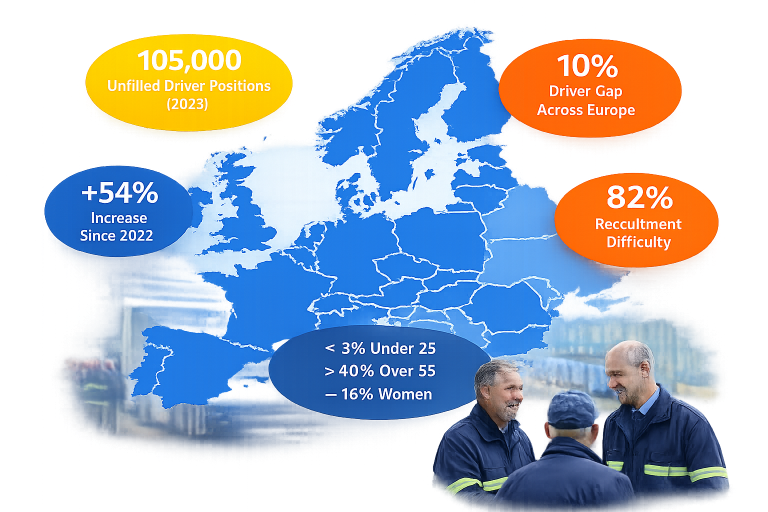
Bus drivers are the backbone of public transport. In large public transport companies, they can represent up to ~70% of the workforce. Europe is already short ~105,000 bus & coach drivers (around 10%), with the gap projected to exceed 275,000 by 2028. When schedules slip, traffic spikes, or staffing is tight, drivers are the ones who hold the system together. As the shortage deepens:
- Rosters get tighter. Buffers disappear.
- Small delays spread faster across the day.
- Absence is harder to cover, so missed trips increase.
- Pressure on existing staff grows, driving fatigue and churn.
For more information click here
The hidden time leak: depot minutes
Depots create dozens of repeated, low-speed movements per vehicle — staging, parking, tight turns, reversing, lining up for charging/wash, pull-in/pull-out. Each move is small; across the fleet, it becomes meaningful capacity.
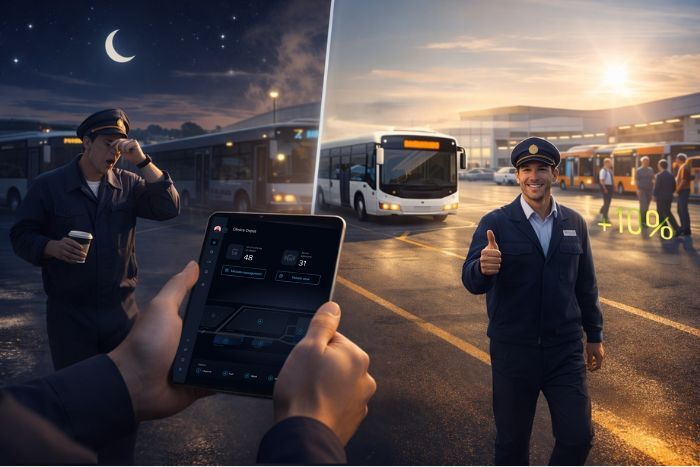
With smart depot, you can support drivers where it counts by automating exactly these repetitive, low-speed depot moves that drain time and energy — helping give drivers time back for line service, ease fatigue from non-productive shunting, and strengthen both retention and service reliability.
“Autonomy doesn’t replace humans – it genuinely supports them. It allows us to relieve drivers from time-consuming and complex maneuvers at the end of their shifts, which reduces the risk of minor collisions and lowers stress and fatigue. This, in turn, translates into a higher level of safety and comfort for our staff.”
Depot Time Calculator
Assumptions:
⇒ 8 hours per shift
⇒ 7 operating days/week
⇒ 220 working days per driver/year
Move the slider to change how many buses use SmartDEPOT™
Total depot driver-hours per day: –
Driver-hours returned to service per day: –
Equivalent extra drivers on the line: –
Initial estimate — for a depot-specific number, click below.

World Public Transport Day
Gliwice, Poland — 17 April 2026
As cities around the world mark the first World Public Transport Day on 17 April 2026, PKM Gliwice and Autonomous Systems are using the moment to celebrate the people who make public transport happen: drivers — and to highlight a practical form of autonomy that supports them in daily work.
Autonomous Systems at IT-TRANS
Karlsruhe, Germany – 19 February 2026
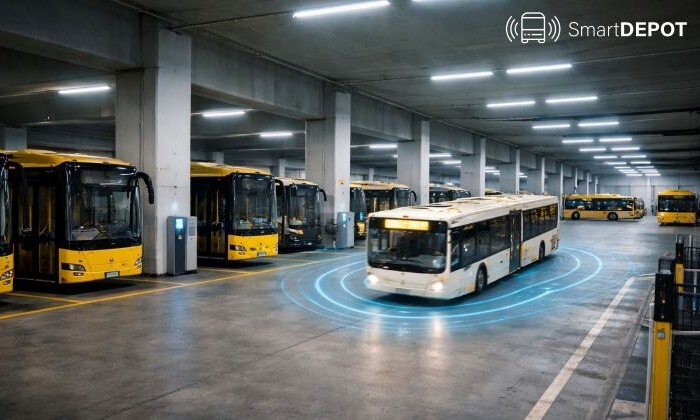
At IT-TRANS 2026 (Karlsruhe, 3–5 March), Autonomous Systems will present its depot-first autonomy approach for European smartbuses. Co-CEO Jan Gramatyka will speak at the Market Update Forum on 4 March (15:00) and serve as an expert trainer in the UITP Academy session on smart depots. Autonomous Systems is also a Future Mobility Award 2026 finalist.
Smartbus Pilot at PKM Gliwice
Gliwice, Poland – 5 December 2025
Autonomous Systems, a technology company founded and operating in Gliwice, has launched the Smartbus Pilot together with PKM Gliwice at the city’s depot. The project brings together local engineering expertise and the experience of a municipal public transport operator, advancing a new category of smartbuses – standard city buses equipped with autonomous driving functions for depot operations.
Giving time back to drivers
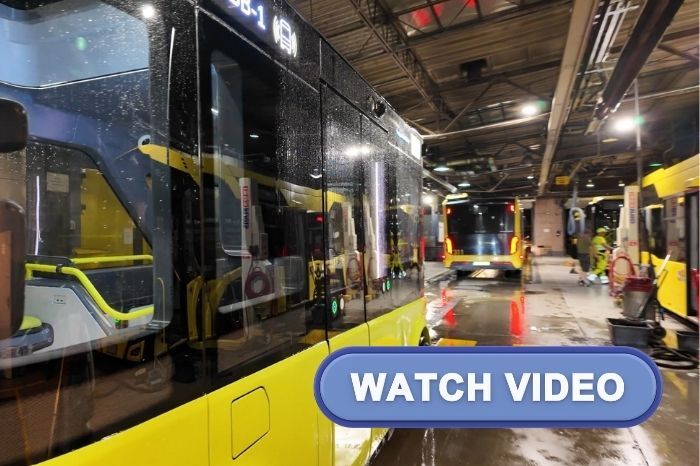
Protect reliability by giving time back to drivers — starting with low-speed depot moves that consume capacity every day. Watch the video to see smartbus – the driver’s friend in the depot.
The ROI of smartbuses
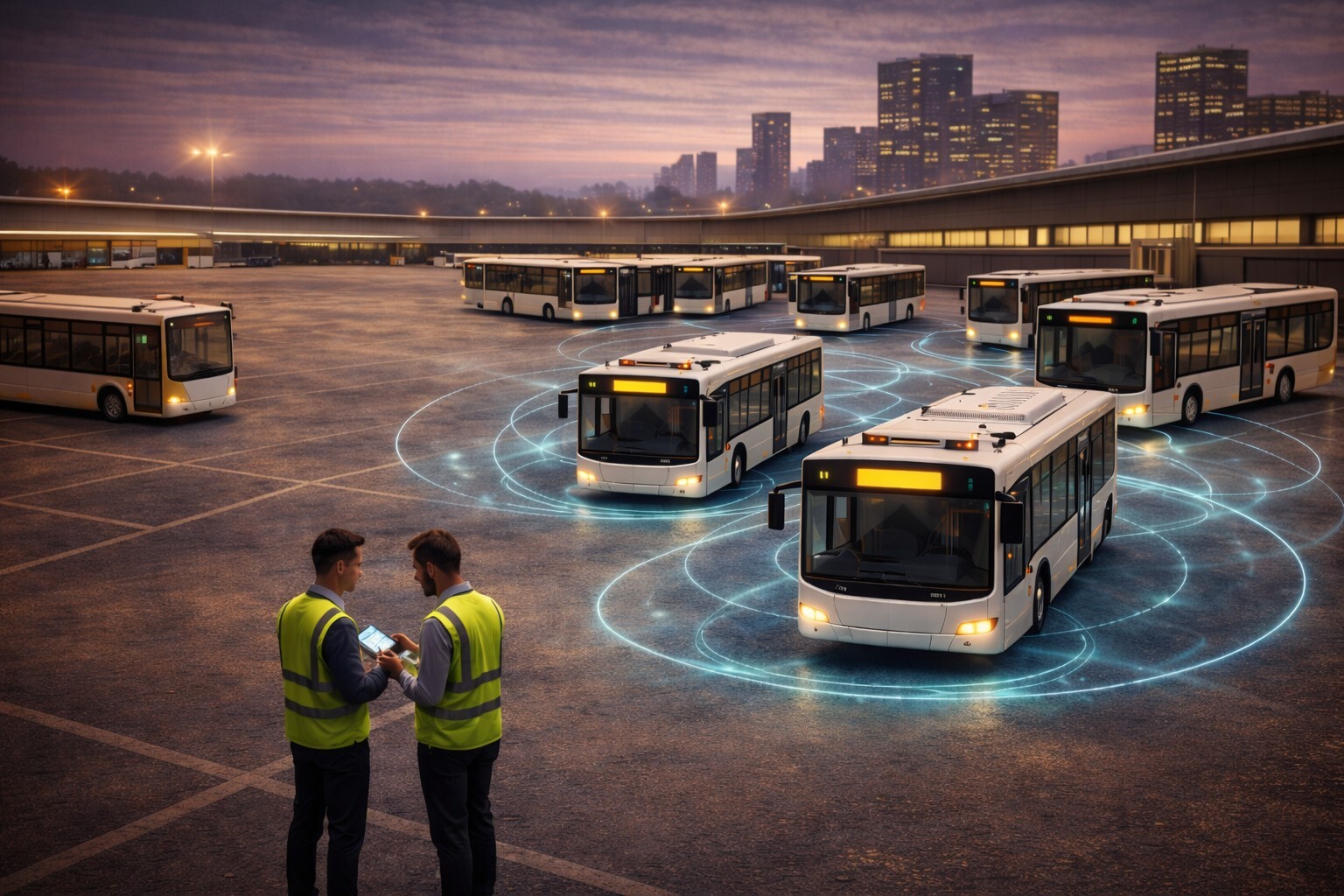
Autonomy in public transport is often discussed as a future end-state. Here’s the practical view: what happens to costs and capacity when you automate the repetitive, non-revenue movements inside the depot. It starts with a simple ROI equation, breaks down the real cost buckets (per bus vs per depot), and shows why fleet scale changes unit economics - a straightforward way to turn “interesting” into “measurable.”
Revolution Evolution in bus autonomy
Autonomous buses won’t arrive via a single leap. This article explains why depot-first autonomy is the practical on-ramp: start in a controlled environment, learn safely in real operations, and build step-by-step readiness for street autonomy without disrupting service.